
Double Life
PLOT 4: Climax
(Fictional narrative by the doctor)
James Fleck, MD, PhD
Anticancerweb 25 (09),2021
Suddenly my cell phone rang.
It was my secretary requesting my presence at the reception, as there were two people wanting to talk to me about Robert's situation. I expressed great enthusiasm as we were desperately looking for family contact. I asked if they identified themselves and what degree of relationship they had with Robert. My secretary said they were just friends.
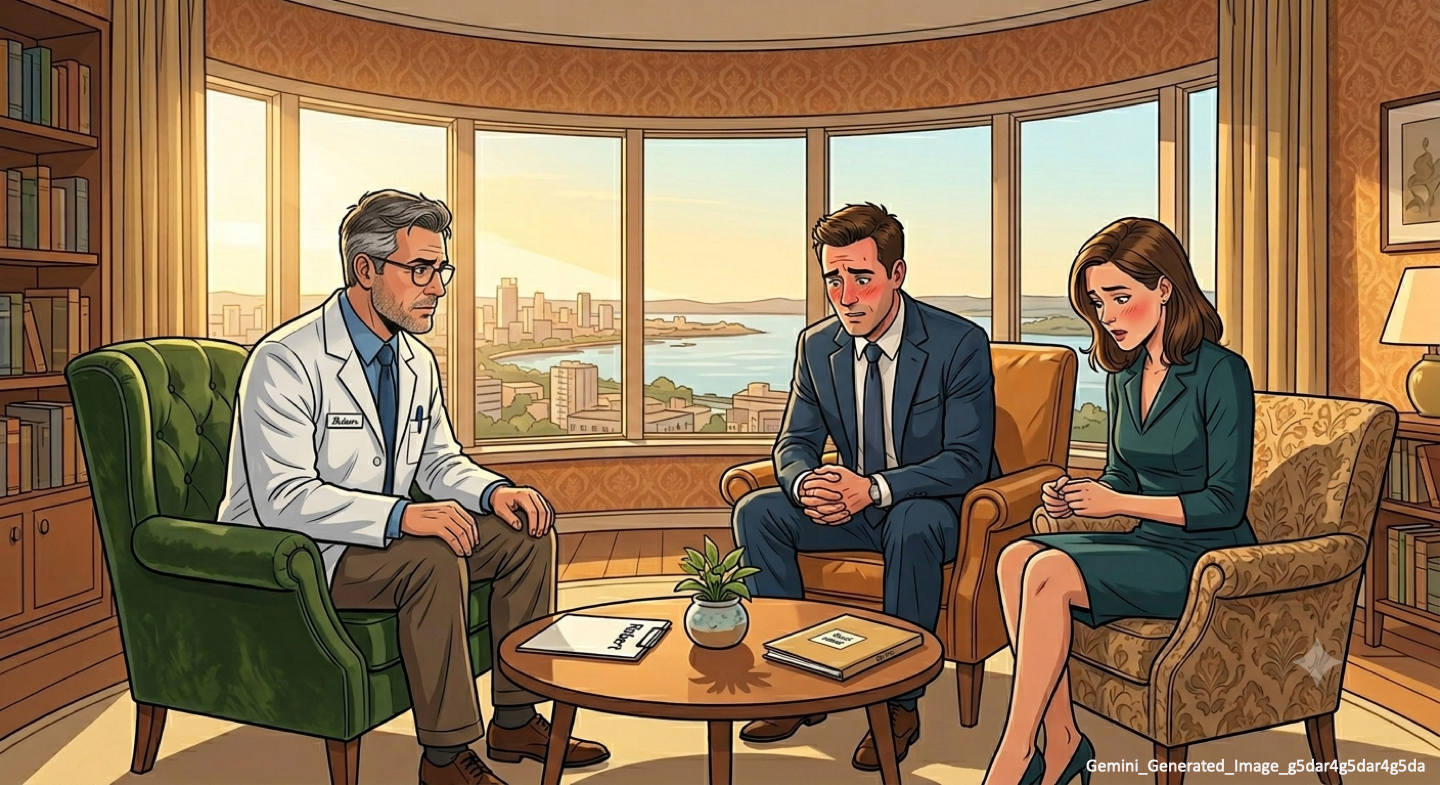
I moved there promptly, while Mark remained in the ward looking after the other patients. I had asked my secretary to accommodate Robert's friends in one of the offices closest to the reception. Upon entering the office, I met a man of about 40 years old, wearing a dark blue suit and a young woman of about 30, also socially dressed. I greeted them both, asked their names and what kind of relationship they had with Robert. The young woman introduced herself as Lisa and the man said his name was Alan. They came to visit Robert separately and occasionally met in Robert's room. Both were clearly surprised and embarrassed by the situation.
Lisa said she was a manager of one of the companies Robert provided services for, and Alan also met Roberto at work, as he was an insurance broker at another company that requested Robert's courier services. Lisa reported starting dating Roberto six months ago and Alan has stated that he was having an intimate and loving relationship with Robert for about two years.
They were unaware of Robert's bisexuality.
Although they still couldn't decide which way to go in the future, they would both support Robert throughout his illness. They chose to stay together and came to talk to me. I told them that Robert was coping very well with all the challenges posed by the illness, both physically and emotionally. I expressed my earlier concern about the lack of contacts. Fortunately, from that moment on, I would have two. I asked them if Robert would have asked for their participation. They informed that, initially, Robert was embarrassed. However, given the sadness of the disease, they started a triangular conversation, where the feeling of solidarity would have prevailed. There was no rupture on either side and Robert said goodbye to them, grateful for their understanding.
Lisa and Alan demonstrated a totally open attitude towards dialogue. It was an unusual situation for me and I didn't quite know how to handle it. However, I felt that this triangulation would have a natural outcome and that I was not there to judge it. I informed them both that Robert was going to need a lot of support as he was about to start chemotherapy. He would have the first cycle in hospital and the following cycles would be administered in the outpatient clinic. I informed that patients should always be accompanied by a family member during chemotherapy sessions. Lisa and Alan made eye contact and reaffirmed their intention to support him. I made myself available for future needs and asked them to enter their phone numbers on Robert's hospital record.
We said goodbye cordially.
To be continued in PLOT 5.
* Attention: The story 8 will be published sequentially from PLOT 1 to PLOT 6 and you will always see the most recent posting. To read Story 8 from the beginning, just click in the numbered links located at the bottom of the homepage.
Reference:
Image: A Lotus Flower - Climax - Double Life: Image created by Gemini [Internet]. Mountain View (CA): Google LLC; 2026 [cited 2026 Jun 27]
Authors Info & Affiliations:
James Fleck, MD, PhD: Full Professor of Clinical Oncology at the Federal University of Rio Grande do Sul, RS, Brazil (www.jamesfleck.com)
® Anticancerweb Clinical Simulation Copyright 2018
It seems that human beings do not have a history, or else we have several stories at the same time. And part of our struggle throughout life is trying to make sense of them by seeking a unity. We have a history with things: with each of them; with places: with each of them; with people: with each of them. That is, we have a history of relationship with each of the things, people and places that affect us. So the list is immense. In this perspective, we have a history of our sex life, a history of the relationship with the transcendent, a family history, a history of our way of understanding friendship, a history of our experience at work, a history of the relationship with money, etc. Then, when a patient, like Robert, arrives at the hospital or the office loaded with his stories, the visible and the hidden, the ones that have earned the right to be narrated and the ones that as pieces of a puzzle are still waiting to be reconstructed. It is the health professional -in this case- to discern the extent to which it is necessary to visualize "the text in its context" to better understand it and offer a better follow-up.
When a patient, like Robert, arrives at the office loaded with his stories, the visible and the occult, those that have earned the right to be narrated and those that as pieces of a puzzle are still waiting to be rebuilt. It is the health professional -in this case- to discern the extent to which it is necessary to visualize "the text-in-its-context" to understand it and offer a better accompaniment.
Please login to write your comment.
If you do not have an account at Anticancerweb Portal, register now.